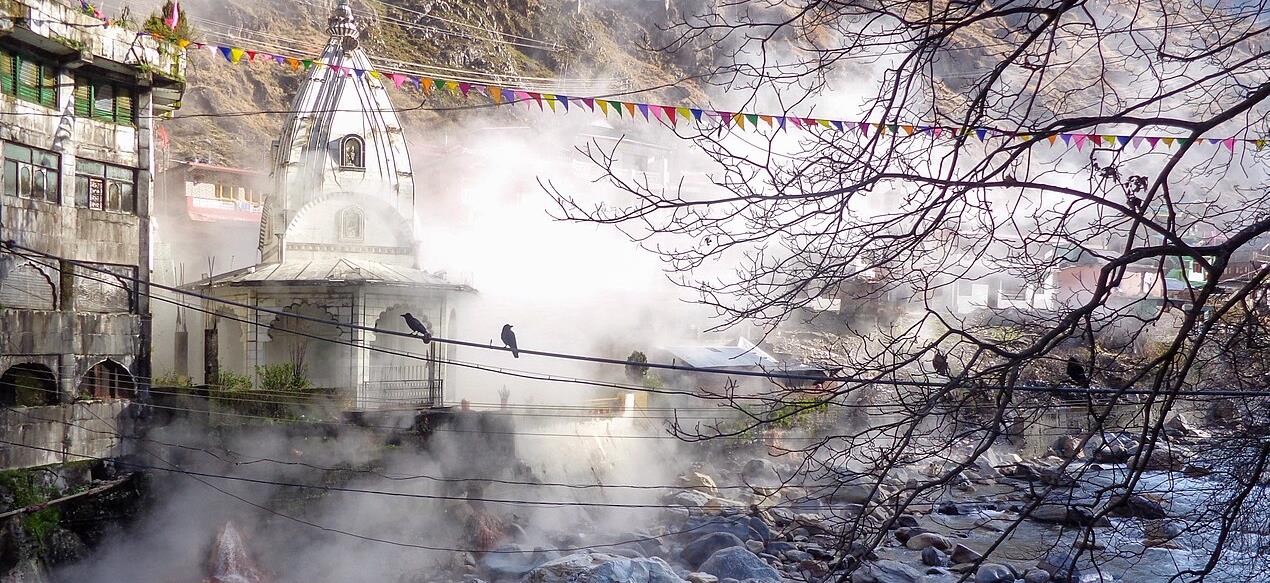
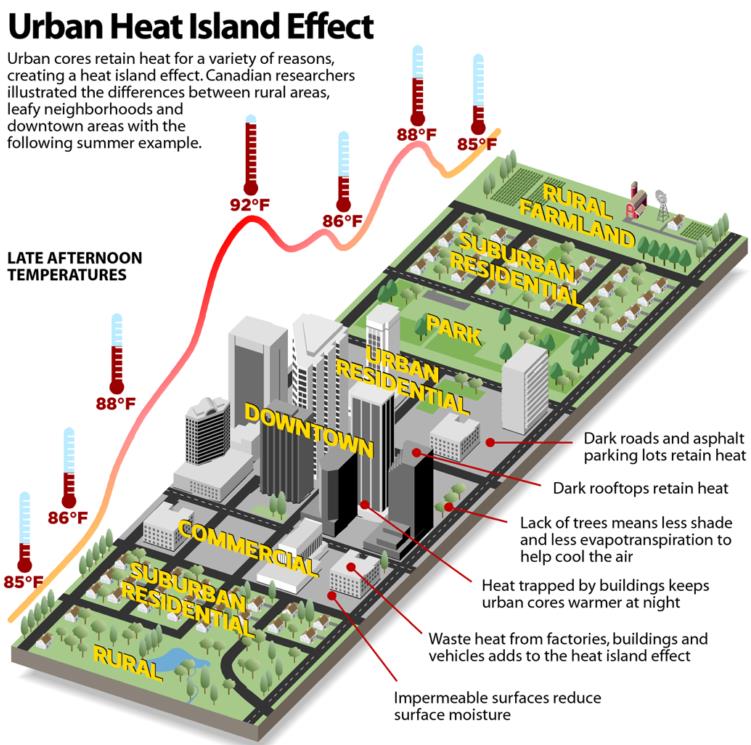
Historically, hill towns like Mussoorie, Nainital, and Shimla were prized for their cool, temperate climates and breathable built forms—natural retreats from the scorching plains. Their altitude, dense vegetation, and porous architectural envelopes created thermal comfort without mechanical systems. Today, this balance is under threat. Microclimate studies reveal a sharp rise in surface temperatures due to unregulated development, deforestation, and thermally absorptive materials like RCC slabs, metal roofing, and black tar. These elements now trap and radiate heat, increasing local temperatures by 10–12°C and spiking indoor heat loads.
What’s often overlooked is altitudinal solar amplification—higher UV and infrared radiation levels in the hills intensify surface heating. As a result, energy demands for artificial cooling are rising, even in traditionally temperate zones.
Passive thermal strategies such as cool roofs and vegetated skins offer vital low-energy solutions. These systems go beyond heat deflection—they actively regulate radiation, improve envelope performance, and restore ecological thermal buffers in these sensitive highland environments.
Understanding Solar Reflectivity and Albedo in Building Envelopes
Albedo is a dimensionless ratio (0 to 1) representing the proportion of solar radiation a surface reflects. In architectural design, albedo critically influences surface temperature, near-surface air conditions, and infrared re-radiation, making it a powerful passive thermal control variable. Materials with high albedo (>0.7)—such as lime-washed plaster or silica-infused cool coatings—can reflect over 70% of solar radiation, significantly reducing thermal absorption.
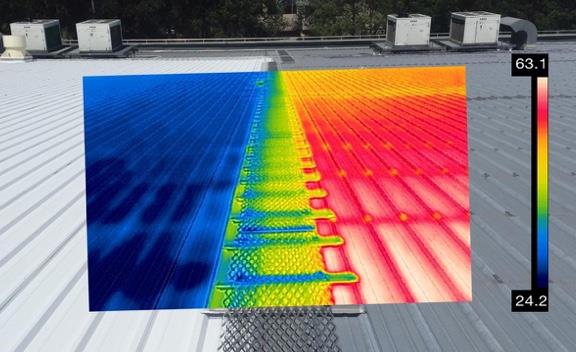
In Indian summers, a black RCC roof (albedo ~0.05) can heat up to 65–70°C, while a high-albedo surface remains around 40–45°C. This thermal differential reduces indoor heat gain by 20–30%, particularly in uninsulated structures, and lowers HVAC energy loads. Field studies from India show localized ambient cooling of up to 2.5°C with albedo-enhancing roof treatments—an important metric for the Himalayan hill towns, where altitude amplifies solar intensity.
Design Insights
” Use spectrally selective, high-SRI coatings on institutional, hospitality, and school rooftops to reduce solar load, enhance thermal comfort, and curb longwave heat buildup in composite and high-radiation climates.”
Cool Roof Systems – Materials, Layers, and Thermal Science
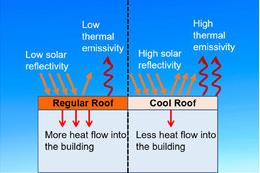
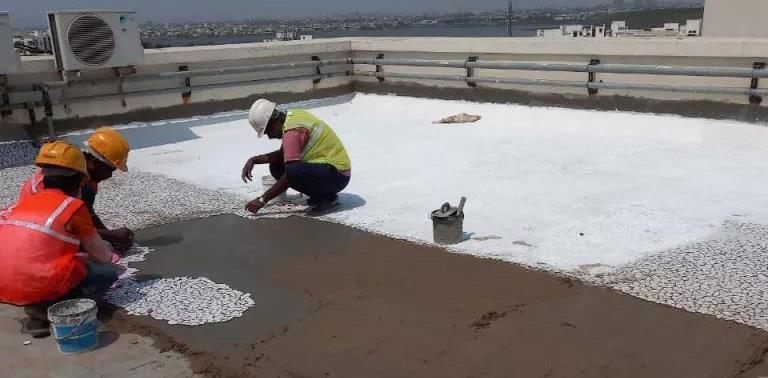
Cool roofs are a passive design strategy that minimize heat gain by reflecting solar radiation and re emitting absorbed heat. Their effectiveness hinges on two key surface properties: solar reflectance and thermal emittance, together expressed as the Solar Reflectance Index (SRI). A higher SRI value indicates better thermal performance; for flat roofs in Indian climates, an SRI ≥ 78 is considered optimal. Cool roof systems are not limited to white paint. They include high-SRI ceramic or composite tiles, reflective waterproof membranes, lime-cement plasters, and silica-based coatings with near-infrared (NIR) reflectivity. Traditional lime mortar, used for centuries in Indian architecture, has shown surprising parity with modern materials in thermal performance due to its high albedo and breathability. Multi-layered cool roofs, especially those with air gaps or insulation layers beneath the surface, further reduce conductive heat transfer, making them ideal for retrofitting uninsulated RCC roofs.
In India, the Bureau of Energy Efficiency (BEE) recognizes cool roofing in the Eco Niwas Samhita (ENS) for residential buildings, and Telangana’s Cool Roof Policy (2023) is the country’s first mandate promoting it at scale. Architecturally, cool roofs offer an elegant synthesis of climate adaptation, material intelligence, and regulatory alignment, especially vital in hill towns where solar intensity is amplified by elevation.
Green Skins – Living Walls and Roofs as Bioactive Envelopes
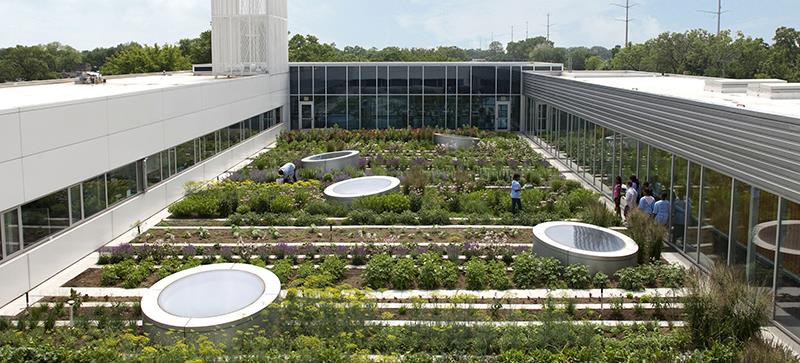
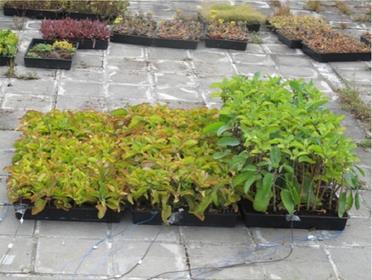
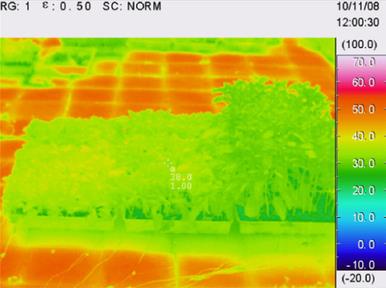
Green roofs and living walls function as bioactive building skins, transforming inert surfaces into climate regulating, ecosystem-supporting layers. Beyond aesthetics, they serve as dynamic thermal regulators through evapotranspiration, solar shading, and thermal mass buffering, reducing roof surface temperatures by 20–30°C and ambient temperatures by 5–7°C. Structurally, a green roof comprises multiple engineered layers: waterproof membrane, root barrier, drainage system, growth substrate, and vegetation layer. The design varies by type—extensive systems are lightweight and low-maintenance, while intensive systems accommodate deeper soils, diverse plantings, and occasional use as accessible terraces. From an architectural standpoint, green skins are highly adaptable in stepped hill structures, hospitality terraces, and urban rooftops, particularly in climatically sensitive zones like Uttarakhand. These systems improve thermal comfort, reduce runoff, increase roof lifespan, and enhance biodiversity. Selecting native, drought-resilient species—such as sedum, vetiver, Himalayan grasses, or ferns—ensures minimal irrigation needs and long-term resilience.
As hill towns face increasing surface hardscaping and heat gain, integrating green roofs and vertical vegetation offers a scientifically validated, architecturally expressive response to restore thermal equilibrium and ecological connectivity in built environments.
Performance Benefits of Cool Roofs & Green Skins
Cool roofs and green skins (including green roofs and vegetated façades) are advanced passive strategies that enhance building performance, particularly in climate-sensitive zones like Indian hill towns. By reflecting solar radiation and moderating surface temperatures, cool roofs reduce solar heat gain, cutting cooling demand by 10–30% and improving indoor thermal comfort—often negating the need for active HVAC systems during shoulder months. Green roofs, meanwhile, function as high-performance thermal and ecological barriers. Their multi-layered build-up includes:
- Vegetation layer (sedums or perennials)
- Growing medium (engineered substrate)
- Filter sheet (prevents substrate migration)
- Drainage board (regulates water retention)
- Moisture retention fleece (protects the membrane while aiding capillarity)
- Waterproofing membrane (guard against root penetration and hydrostatic pressure)
- Thermal insulation (improve U values)
- Vapour control layer (provides airtightness)
- Structural deck (usually concrete, sometimes with admixtures for durability)
This build-up enables hydrological regulation—retaining up to 75% of rainfall, thus mitigating urban runoff, reducing peak flow, and protecting downstream infrastructure. Simultaneously, evapotranspiration and soil insulation modulate rooftop microclimates, lowering ambient temperatures and contributing to the reduction of the urban heat island effect. Green skins also serve as air quality filters, absorbing pollutants and carbon dioxide, and releasing oxygen. Their role as biodiversity refuges is critical in urban areas—supporting birds, insects, and pollinators, especially in ecologically fragmented hill town environments. They also provide acoustic insulation, attenuating ambient noise through layered mass and vegetation. From an architectural standpoint, they enhance roof membrane longevity by shielding it from UV radiation and freeze-thaw cycles— often extending lifespan to over 40 years. Aesthetically, they transform rooftops into green, usable landscapes, mitigating the visual harshness of dense urbanization.
In green certification systems—LEED, IGBC, and GRIHA—green roofs earn points across multiple credits: heat island mitigation, stormwater management, energy performance, acoustic comfort, and landscape integration.
Whether deployed as extensive systems (lightweight, low-maintenance sedum blankets) or intensive systems (supporting trees and deeper soils), green roofs are not merely ecological accessories—they are integrative systems that align material science, building physics, and ecological design.
Design & Execution Considerations
Designing cool roofs and vegetated skins in hill town contexts demands a synthesis of architectural intent and scientific precision. Structural integrity is paramount—rooftops must be evaluated for adequate load-bearing capacity to support green roof assemblies, particularly in intensive systems with deeper substrates. In sloped terrains, slope orientation and gravitational water flow patterns must guide drainage strategies to prevent erosion and ensure plant viability. Detailing for root barriers, filter membranes, and moisture-retention layers is critical to long-term performance. Cool roof coatings must be selected based on albedo stability, UV resistance, and hydrophobicity to withstand fluctuating temperatures and precipitation cycles. Materiality plays a key role in sustainability: locally sourced lime plasters, reclaimed clay tiles, and broken terracotta elements can reduce embodied energy while maintaining thermal mass. Seasonal maintenance of the vegetation layer, including irrigation and pruning cycles, ensures ecological resilience and aesthetic continuity in diverse microclimatic zones.
Case Studies & Examples
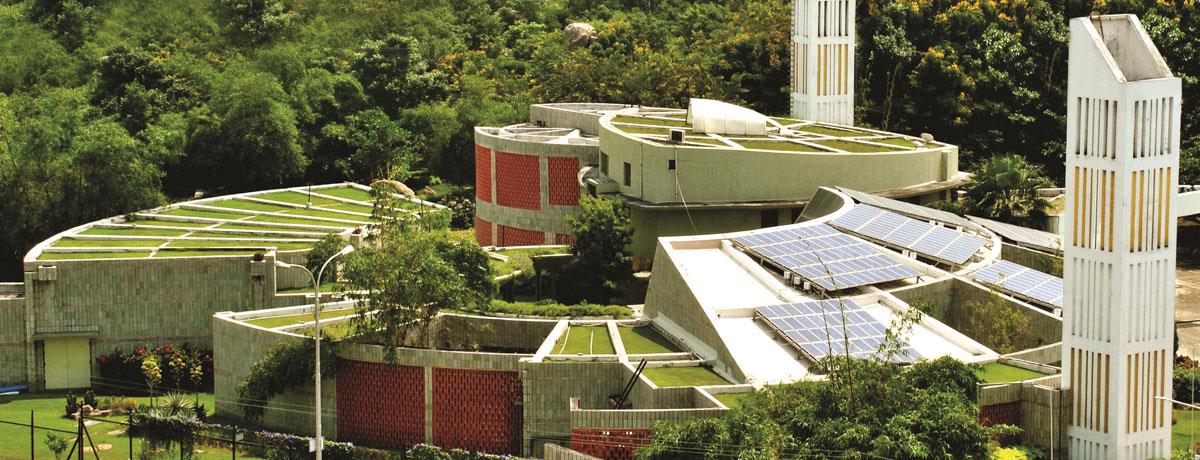
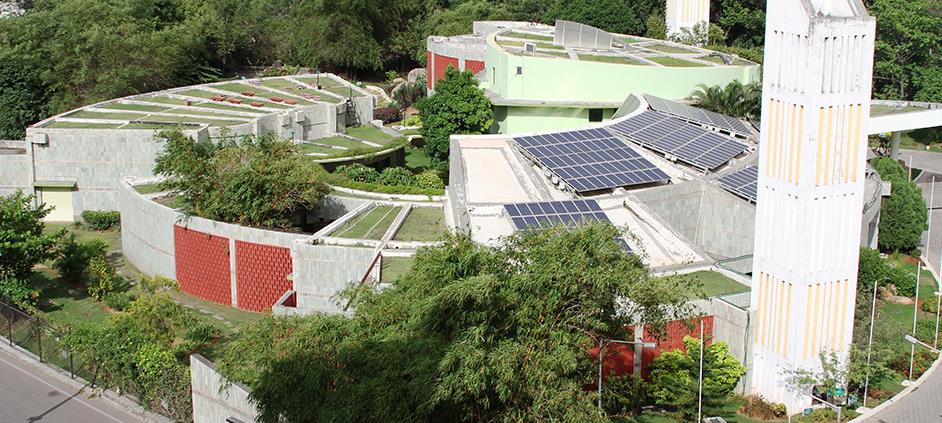
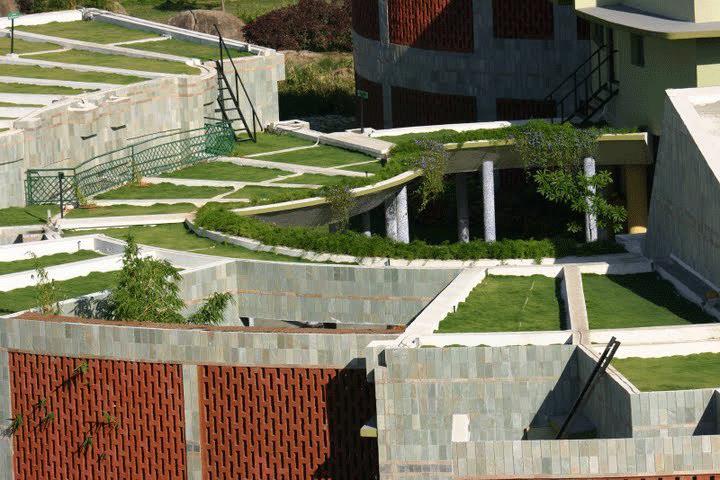
CII-Sohrabji Godrej Green Business Centre
- Green Roof Coverage: ~55–60% of total roof area is vegetated, reducing rooftop heat gain and enhancing thermal insulation.
- Roof Build-up:
o Base: Concrete slab.
o Triple Waterproofing Layer: Provides high durability against root penetration and water
leakage.
o Soil Layer: ~2 inches of sandy soil used as a lightweight and porous growing medium.
o Top Layer: Pervious paver blocks topped with uniform grass sod—identical to paving and green areas at grade. - PV Integration: Remaining roof area hosts a 24 kW solar photovoltaic system, generating 100 120 units/day, meeting ~20% of the building’s total energy cost.
- Irrigation: Green roofs are irrigated daily during dry season, supported by recycled wastewater.
- Water Recycling System:
o Root Zone Treatment with selected vegetation filters and purifies all greywater and roof runoff.
o Recycled water is diverted to three step-down ponds and reused for irrigation and flushing. - LEED Certification:
o 56 credits under LEED NC v2.0, achieving India’s first LEED Platinum (2003). - Urban Heat Island Mitigation:
o Grass-covered roofs maintain lower surface temperatures and contribute to surrounding
microclimate moderation.
Cool roofs and green skins represent architecture as climate infrastructure—passive, site-adaptive, and ecologically regenerative. For India’s hill towns, where rising heat and water stress threaten both heritage and habitability, these strategies are not just desirable—they’re essential.
“As architects and planners, integrating material science, climatic response, and ecological intent enables us to transform rooftops and façades into active environmental systems. With policy backing (e.g., ENS, state mandates), these technologies can mainstream into India’s diverse building landscape—from public institutions to private dwellings in high-altitude zones.”