As hospitality infrastructure rapidly expands across Uttarakhand’s ecologically fragile and climatically sensitive zones, the urgency to adopt sustainable energy solutions has never been greater. Traditional energy systems not only strain local resources but also accelerate environmental degradation in this delicate Himalayan ecosystem. The sector now stands at a crossroads—where energy-intensive growth must be balanced with ecological responsibility. Geothermal energy presents an optimal, underutilized solution. By harnessing the Earth’s stable subsurface heat, it offers a low-emission, high-efficiency alternative for heating, cooling, and hot water systems. With Uttarakhand’s rich geothermal reserves and rising demand for climate conscious travel, now is the time to embed this clean technology into the future of mountain hospitality design.
Understanding Geothermal Energy in Uttarakhand
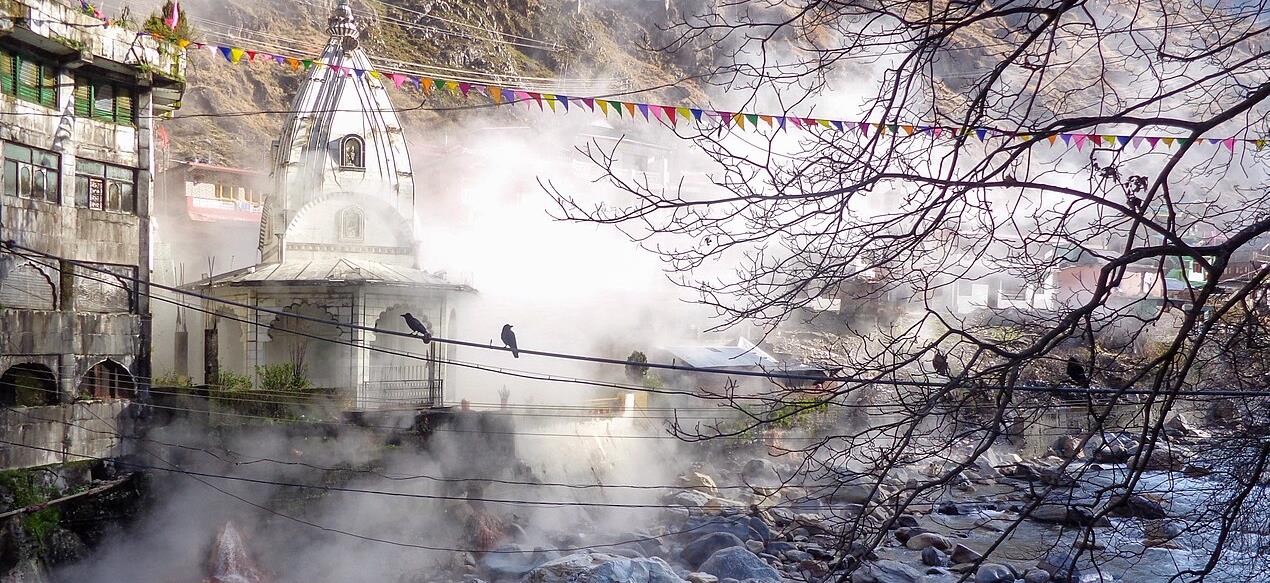
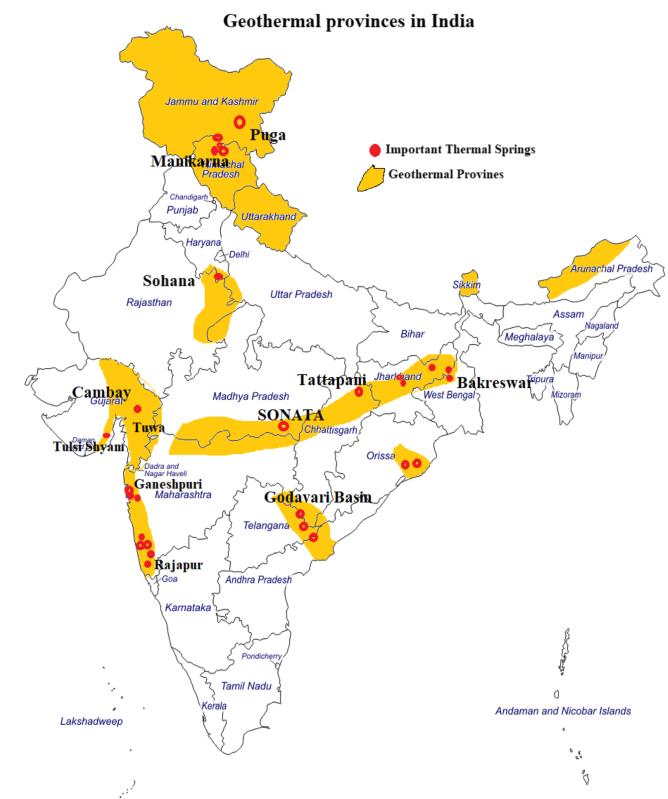
Uttarakhand lies within one of India’s most promising geothermal provinces, with over 60 geothermal springs identified across the Himalayan belt. According to the Geological Survey of India (GSI) and UN studies, the Central Indian Himalayas—including regions like Tapovan, Yamunotri, and Sohana—exhibit medium to high enthalpy geothermal activity, making them suitable for both direct-use and geothermal heat pump (GHP) applications. The region’s unique tectonic activity, thin crust, and fault-aligned spring systems allow significant heat flux from the Earth’s interior.
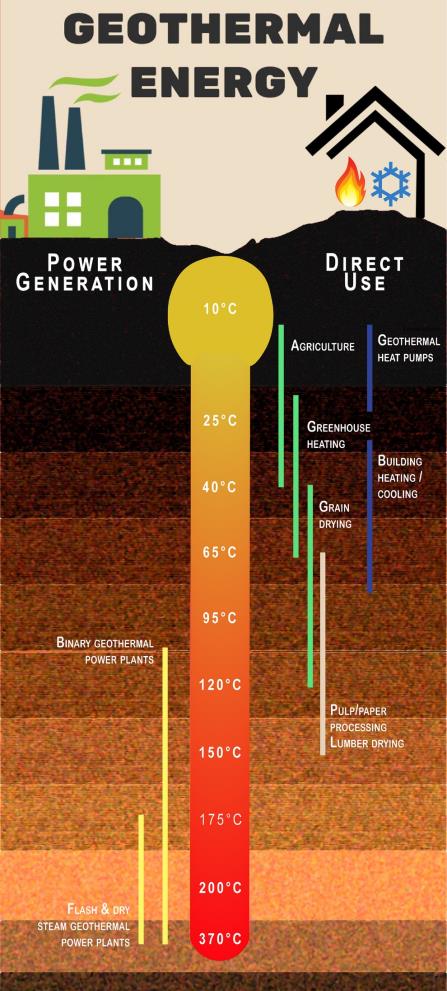
Mussoorie, specifically, demonstrates high geothermal viability. Soil temperature data shows year round stability between 10°C and 21°C within just a few meters of depth. Deeper layers follow the geothermal gradient, increasing by approximately 25–30°C per kilometer, offering an abundant, renewable heat source. This thermal consistency allows GHP systems to perform with high efficiency across seasons—making Mussoorie and similar microclimates ideal candidates for low energy, climate-resilient buildings, particularly in the hospitality and institutional sectors expanding across these terrains.
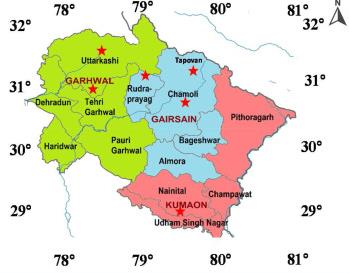
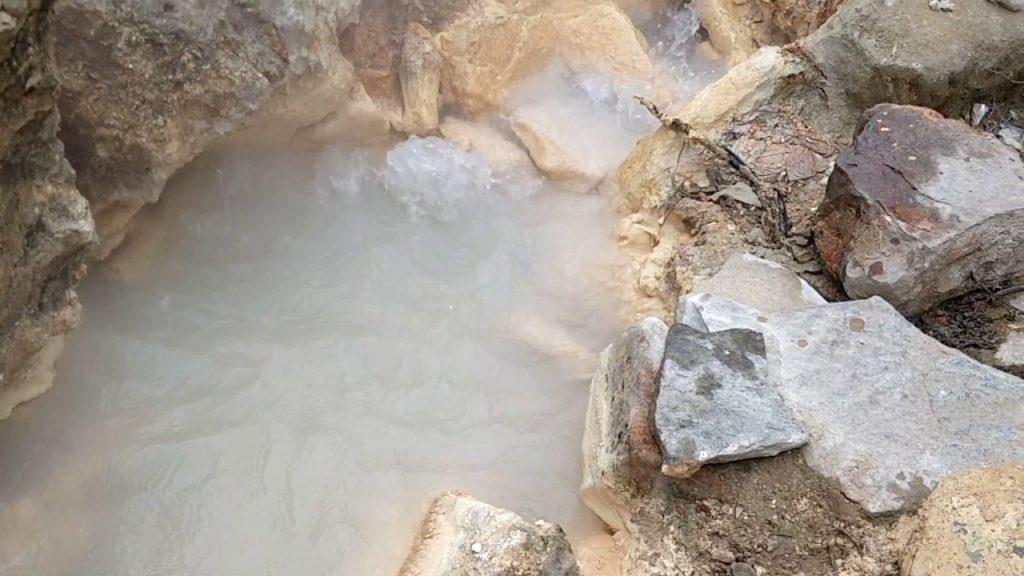
Understanding Geothermal Energy in Uttarakhand
The hospitality sector, particularly in mountainous and climate-sensitive regions like Uttarakhand, can significantly benefit from geothermal integration across multiple operational domains.
- Heating and Cooling Efficiency : Geothermal Heat Pumps (GHPs) utilize the Earth’s stable subsurface temperatures to provide space conditioning. During winter, they extract heat from the ground and transfer it indoors; in summer, the process reverses. Compared to conventional HVAC systems, GHPs can reduce energy consumption by 30–60% and greenhouse gas emissions by up to 70%. System selection—vertical, horizontal, pond/lake, or open-loop—depends on site-specific factors such as soil type, land availability, and water table depth. In hilly terrains like Mussoorie, vertical loop systems are optimal due to limited land area and high geothermal gradients.
- Domestic Hot Water Systems (DHW) : Geothermal energy ensures a continuous and cost-effective hot water supply for guest rooms, kitchens, spas, and laundry. By using ground heat exchangers, hotels can maintain water temperatures above 45–60°C, drastically reducing dependency on fossil-fuel boilers.
- Wellness and Spa Integration : Uttarakhand’s geothermal springs—particularly near pilgrimage sites—can be tapped to create therapeutic thermal baths and spa experiences. Mineral-rich geothermal water can be channelled into wellness infrastructure, echoing iconic projects like the Vals Thermal Baths (Switzerland) or Guðlaug Pools (Iceland), both of which have elevated eco-tourism through geothermal design.
- Sustainability and Certification : Geothermal systems contribute directly to LEED, GRIHA, and IGBC points under energy efficiency, renewable energy use, and indoor comfort categories. This enhances a hotel’s environmental credentials and guest appeal.
- Economic and Lifecycle Advantages : While initial capital expenditure is higher, operational savings are substantial. GHP systems typically have a lifespan of 25+ years, low maintenance needs, and can offer payback within 7–10 years, making them financially and environmentally sound for long-term hospitality projects.

Global Examples of Geothermal Hospitality Design
Several international hospitality projects showcase the successful integration of geothermal energy in building design, offering inspiration for applications in Uttarakhand’s mountainous regions.
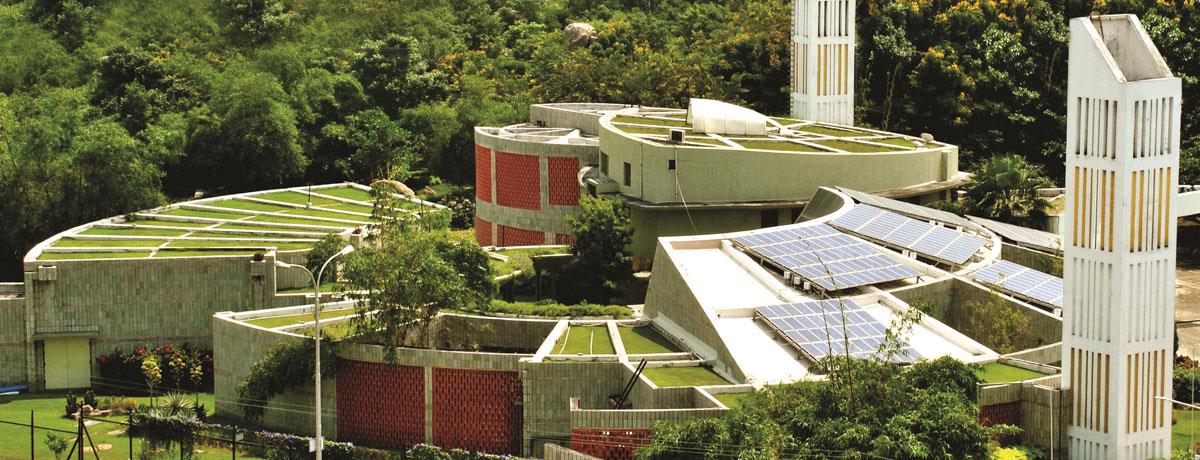
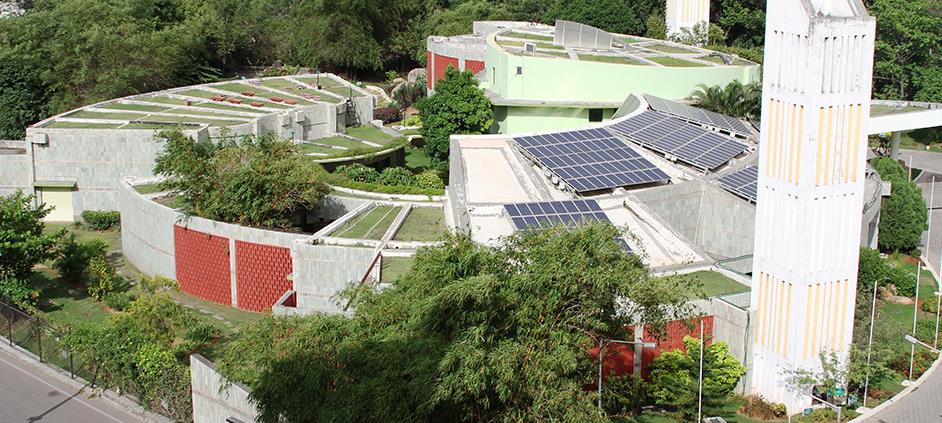
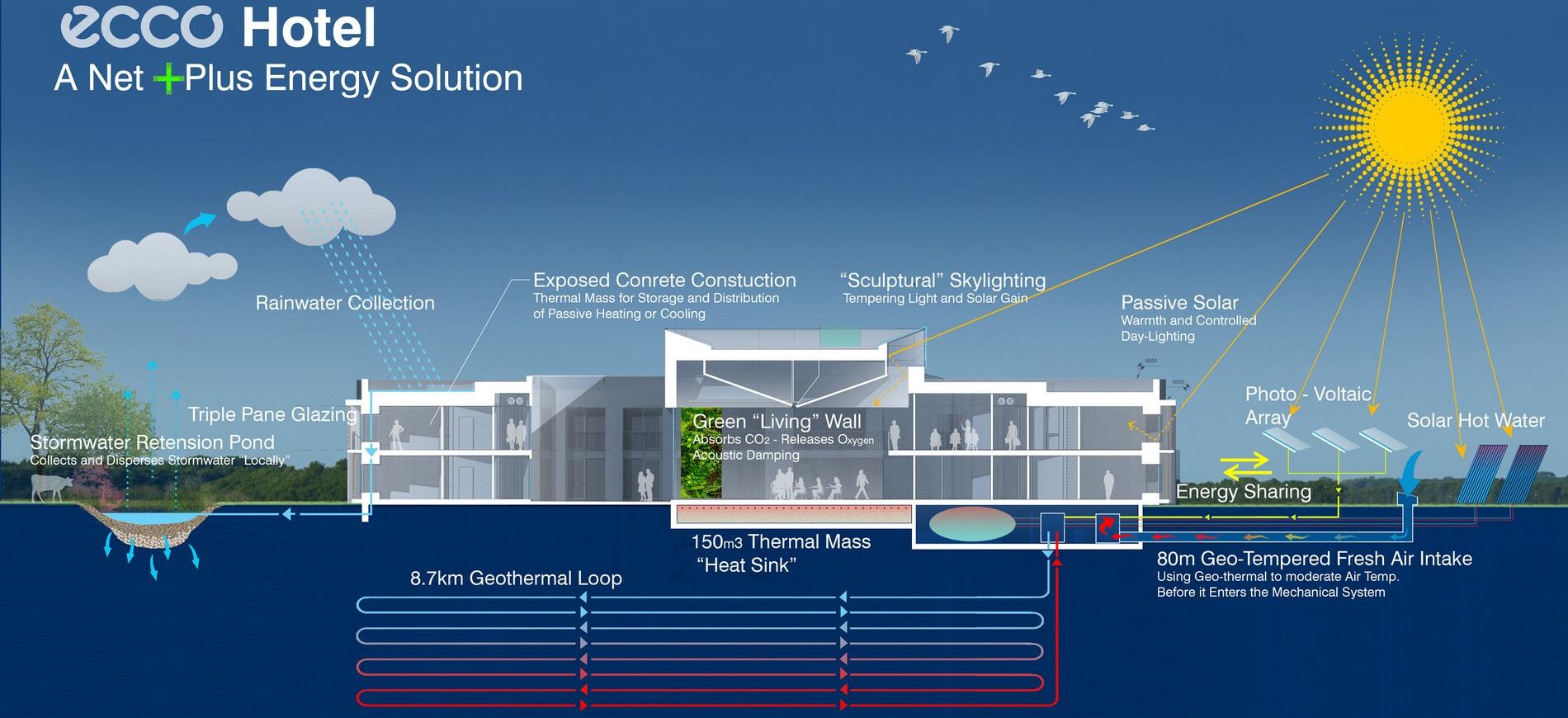
- The Ecco Hotel in Denmark, designed by DISSING+WEITLING Architecture, combines geothermal and solar systems within a highly optimized circular floor plan. This geometry minimizes surface area and heat loss, while promoting efficient spatial planning and internal circulation. The building’s geothermal heat pump system is central to its passive energy strategy, enabling consistent indoor comfort with minimal reliance on external energy sources.
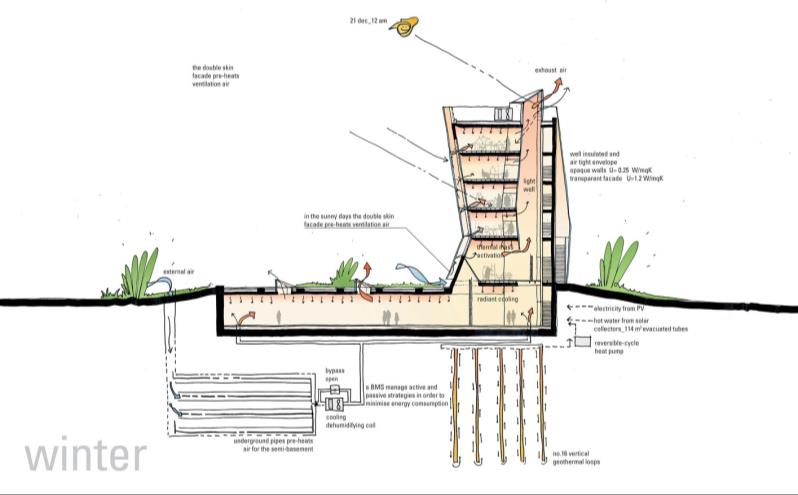
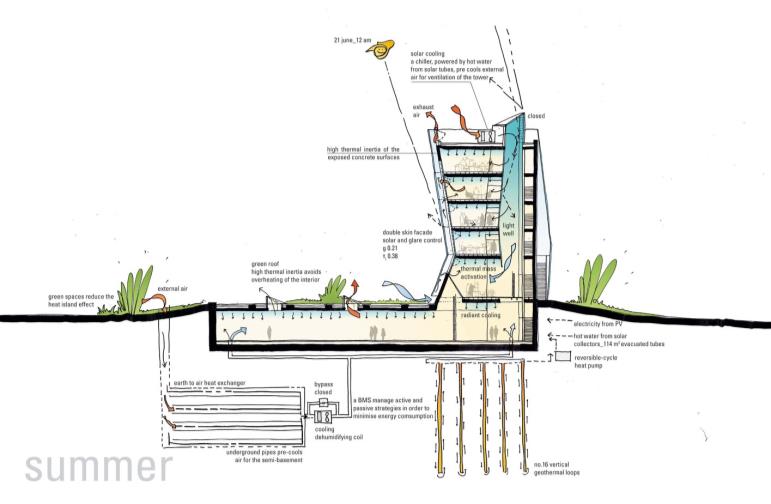
- In China, the Sustainable Technologies Center stands as a model of integrated climate responsive design. Geothermal underfloor heating is paired with stack-effect-driven natural ventilation and large rooftop openings for daylighting. This synergy between geothermal systems and architectural form significantly reduces the building’s operational carbon footprint while enhancing thermal comfort. Both projects underscore the versatility of geothermal energy when aligned with thoughtful architecture. They serve as compelling precedents for hospitality developments in Uttarakhand seeking to merge sustainability with experiential, comfort-driven design.
Scientific and Environmental Evaluation
Geothermal Heat Pumps (GHPs) are among the most energy-efficient HVAC technologies available, delivering up to 60% savings in operational energy costs and reducing carbon emissions by nearly 70% compared to conventional systems. These efficiencies stem from the thermodynamic advantage of transferring—rather than generating—heat using the Earth’s stable subsurface temperature. Architecturally, GHPs integrate well with passive design strategies by maintaining consistent indoor thermal comfort with minimal mechanical intervention.
Scientific studies and building performance evaluations indicate that GHP systems have an average lifespan of 20–25 years for indoor components and over 50 years for underground loop systems. Lifecycle analyses demonstrate that, despite higher upfront investment, the payback period is typically 5–7 years, after which the system yields long-term environmental and financial benefits.
When combined with strategies such as thermal massing, earth insulation, and zoned heating, GHPs become a cornerstone of net-zero energy building design, especially in climate-sensitive regions like Uttarakhand.
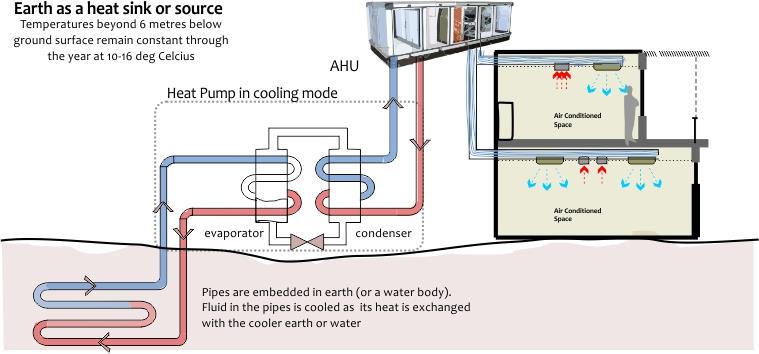
At depths of 4–6 meters, ground temperatures remain relatively constant year-round, making them ideal for thermal exchange through a closed-loop system. Approximately 46% of incident solar energy is stored underground, allowing for heat extracted in summer to be reused in winter, significantly improving building energy performance.
A typical GHP system includes three components:
- Earth Connection – Vertical, horizontal, or submerged loops circulate a heat transfer fluid (usually with antifreeze) through the ground.
- Heat Pump Unit – Transfers heat between the earth connection and the building’s internal system using a refrigerant cycle.
- Heating/Cooling Distribution – Delivers conditioned air via ducts, diffusers, and air handling
systems. This system is most suitable for composite climates, such as those in North India, including Uttarakhand.
| Pros | Cons |
|---|---|
| High energy efficiency (50–70%) | Less effective in extreme or constantly warm climates |
| Low operating and maintenance cost | Requires detailed feasibility analysis for site |
| Provides heating, cooling, and hot water | High initial investment |
| Renewable energy-based | Skilled labor needed for design and installation |
| Enhances green building certifications | Not approved uniformly across all Indian states |
Opportunities in Uttarakhand’s Hospitality Sector
Regions like Badrinath, Kedarnath, and Yamunotri already feature natural geothermal springs. These can be integrated into eco-resorts and pilgrim lodging facilities. Where natural springs are absent, exploratory drilling can facilitate GHP-based installations. This aligns well with the state’s tourism policy and opens doors for public-private partnerships.
Challenges and the Way Forward
Barriers include high upfront costs, limited awareness, and lack of technical expertise. However, targeted subsidies, pilot projects, and design-integrated performance monitoring can overcome these hurdles.
Barriers include high upfront costs, limited awareness, and lack of technical expertise. However, targeted subsidies, pilot projects, and design-integrated performance monitoring can overcome these hurdles.