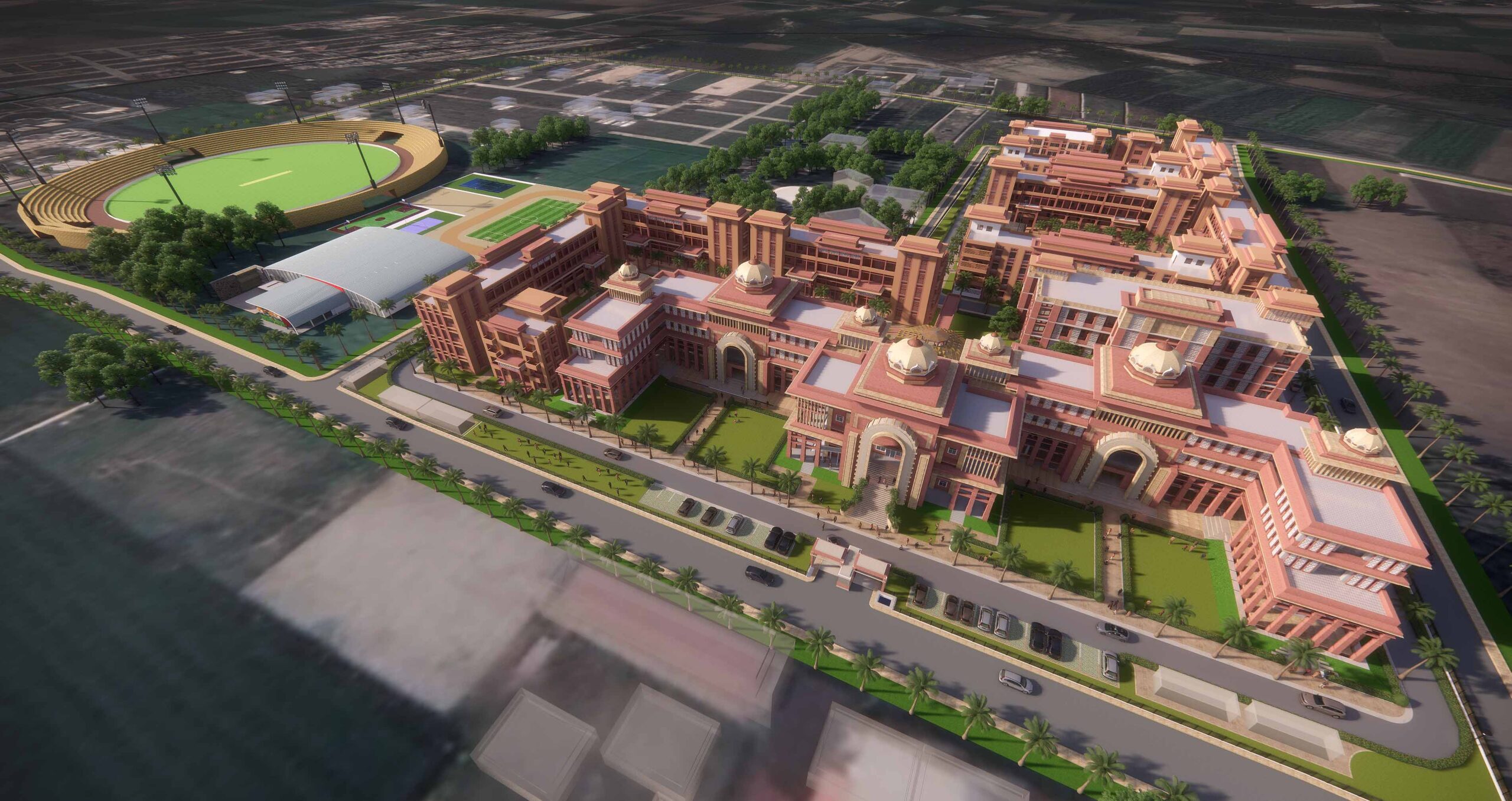
Project Overview
The site is located in Haridwar. It is easily accessible via National Highway 334 (NH 334), which connects Haridwar to Delhi and other major cities. Approximately 30 kms from Rishikesh and 50 kms from Dehradun, makes it approachable for the students of these regions. It is adjacent to Sant Kutir (Residence of Baba Ramdev Ji).
Project Proposal
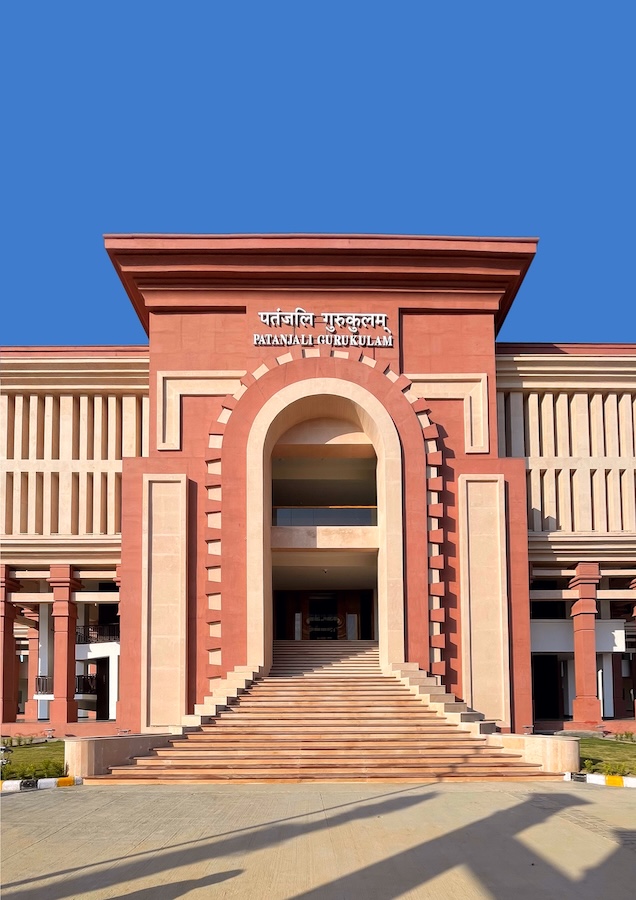
The design brief calls for creating facilities for a senior secondary school, including classrooms, laboratories, a well-resourced library, and a Yagya Shala, along with age-specific hostel blocks. Essential components also include staff accommodations, administrative offices, and communal areas such as a mess, playground and recreational spaces to promote relaxation and social interaction. The campus must be designed with sustainability in mind, creating an eco-friendly and tranquil environment that supports learning and personal development. Architecturally, it should reflect the grandeur of historic institutions like Nalanda and Takshila, blending traditional design elements with modern functionality.
Project Details
Client
Patanjali Yogpeeth Trust
Type
Boarding School
Site Area
3.61 Acres
Location
Haridwar
Status
Completed
Built-Up Area
22,500 sq. m.
Client Brief
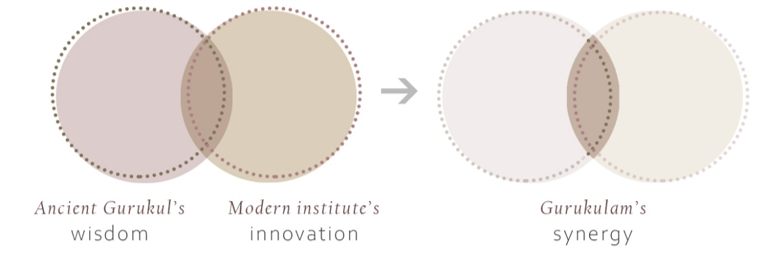
The Patanjali Gurukulam is envisioned as a pioneering educational institution that harmonizes the timeless values of the ancient Gurukul system with modern teaching methods. Its objective is to foster a supportive environment that nurtures students’ intellectual, physical, and spiritual growth while deeply embedding them in India’s rich cultural heritage.
Site Studies
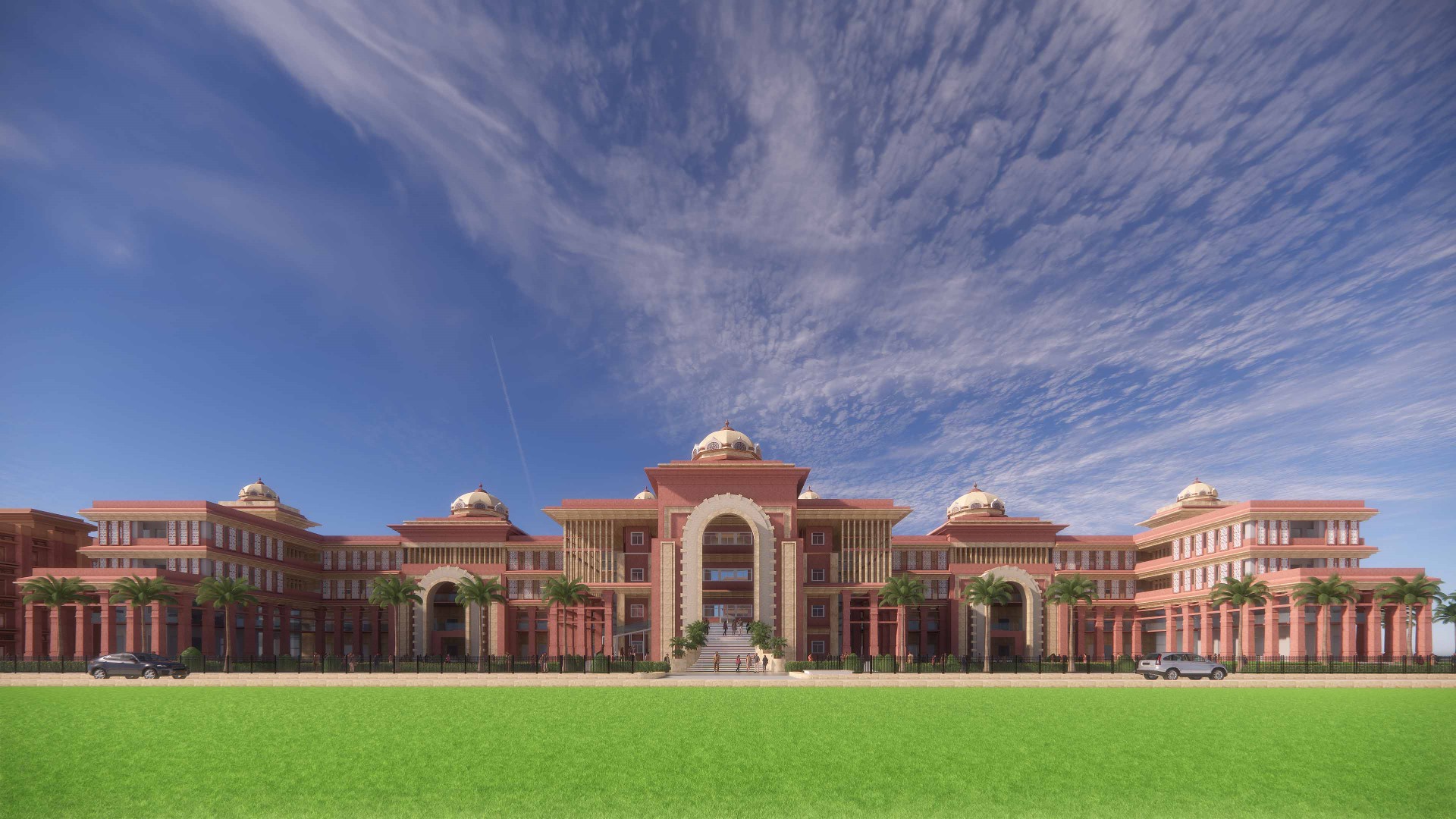
Patanjali Global Gurukul is one of pilot project id currently under construction and it comprises various admisntrative, Staff & Mess Block along with the Main Academic building. It has been designed taking inspiration from our ancient gupta architecture. All the Climate responsive prinicpal have been incorprated to make a green building and Eco friendly Campus.
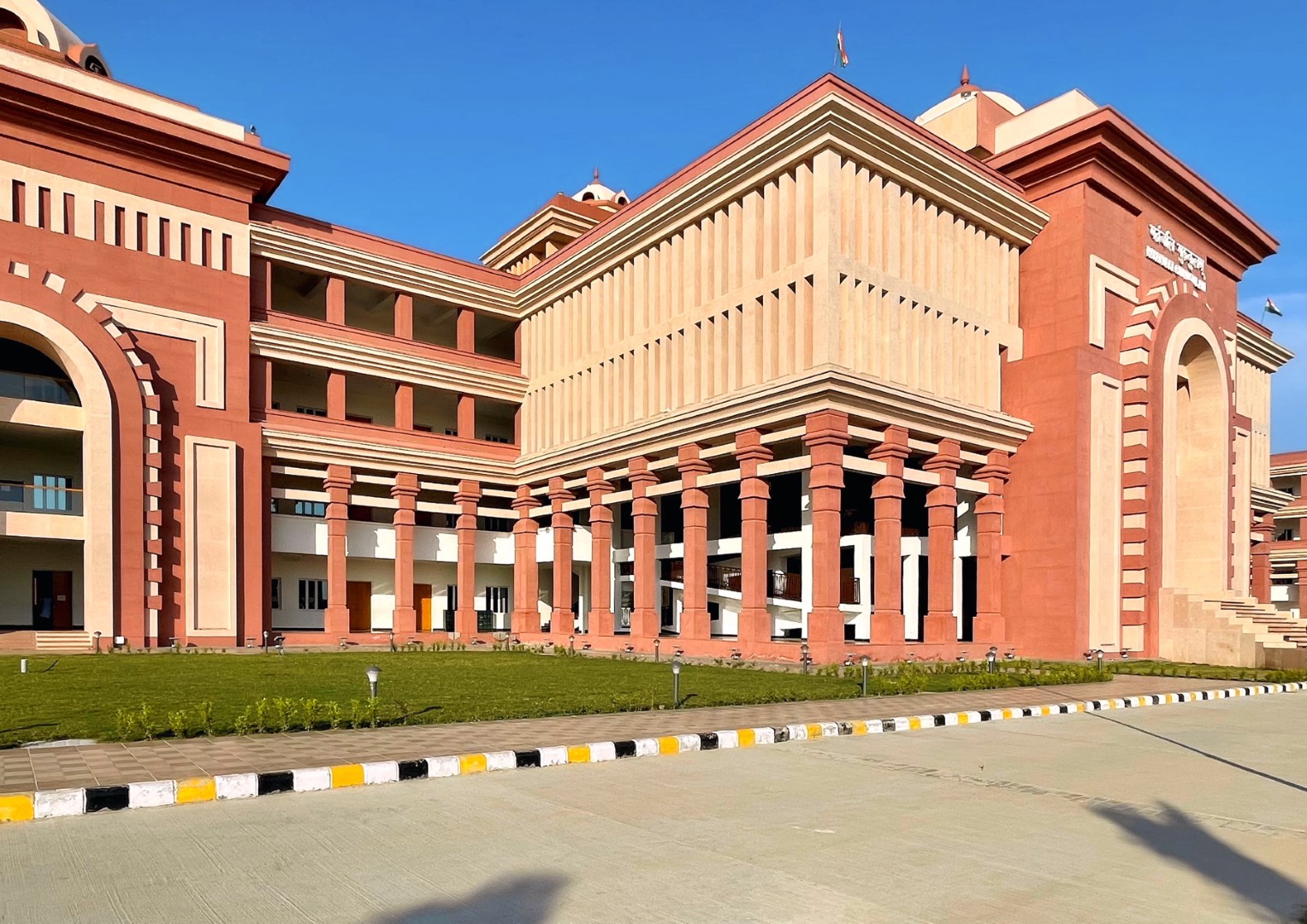
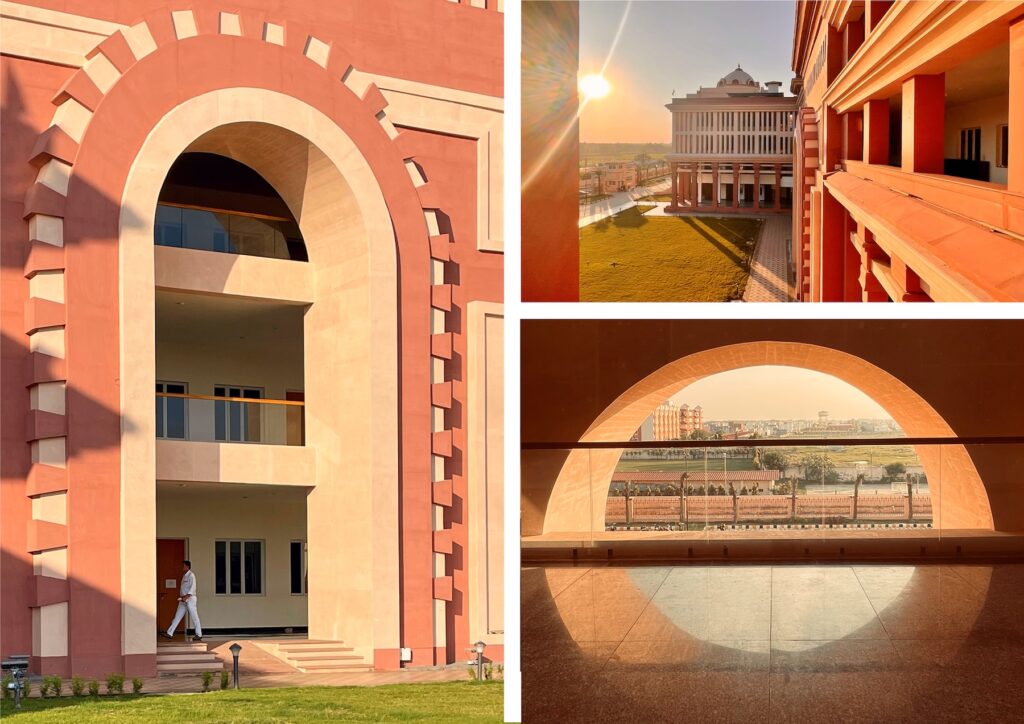
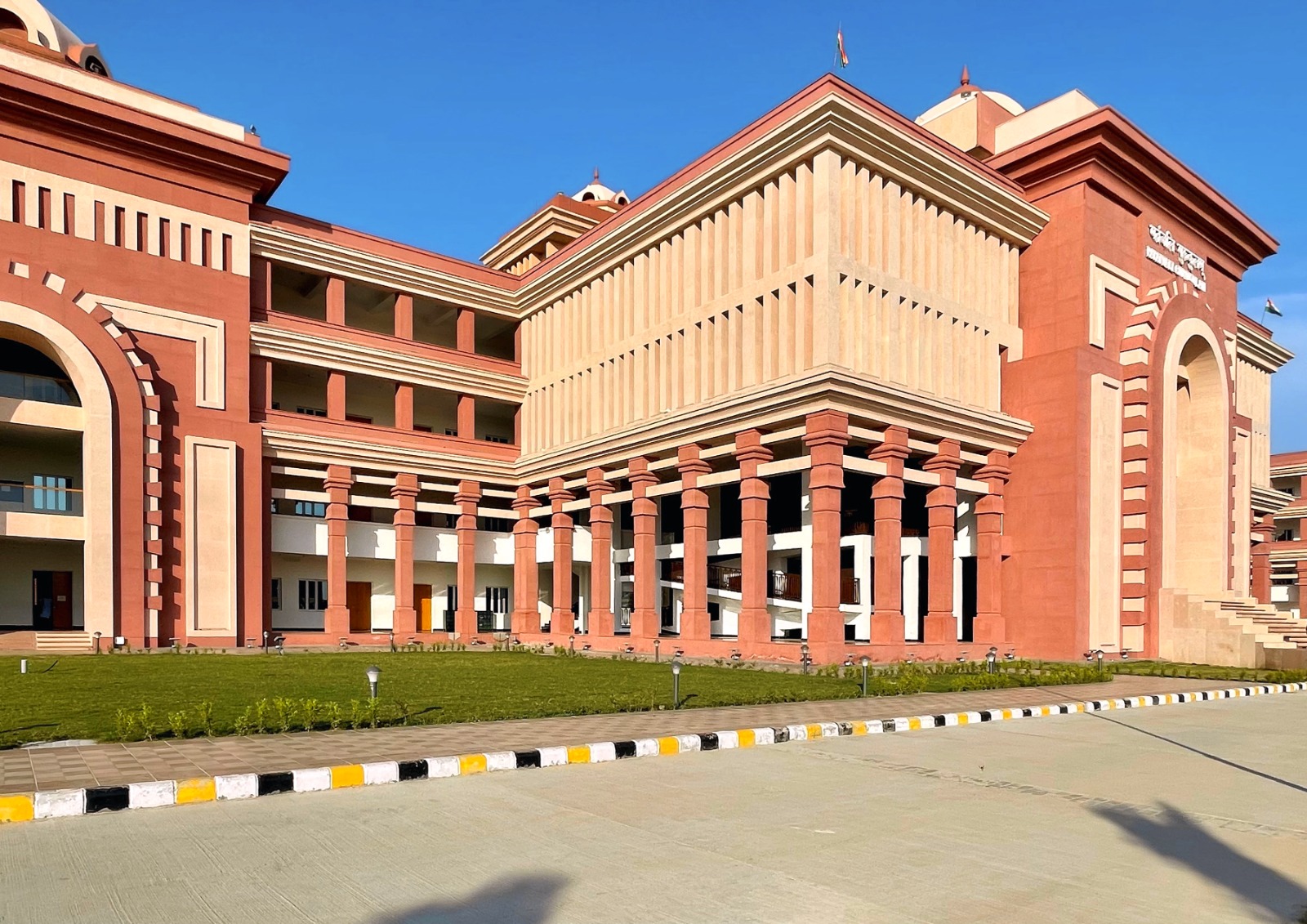
The design emphasizes symmetry, balance, and proportion, with a harmonious color scheme using natural materials like Dholpur beige and red sandstone, chosen for their historical significance and to enhance the visual appeal of the campus.
Design Strategies
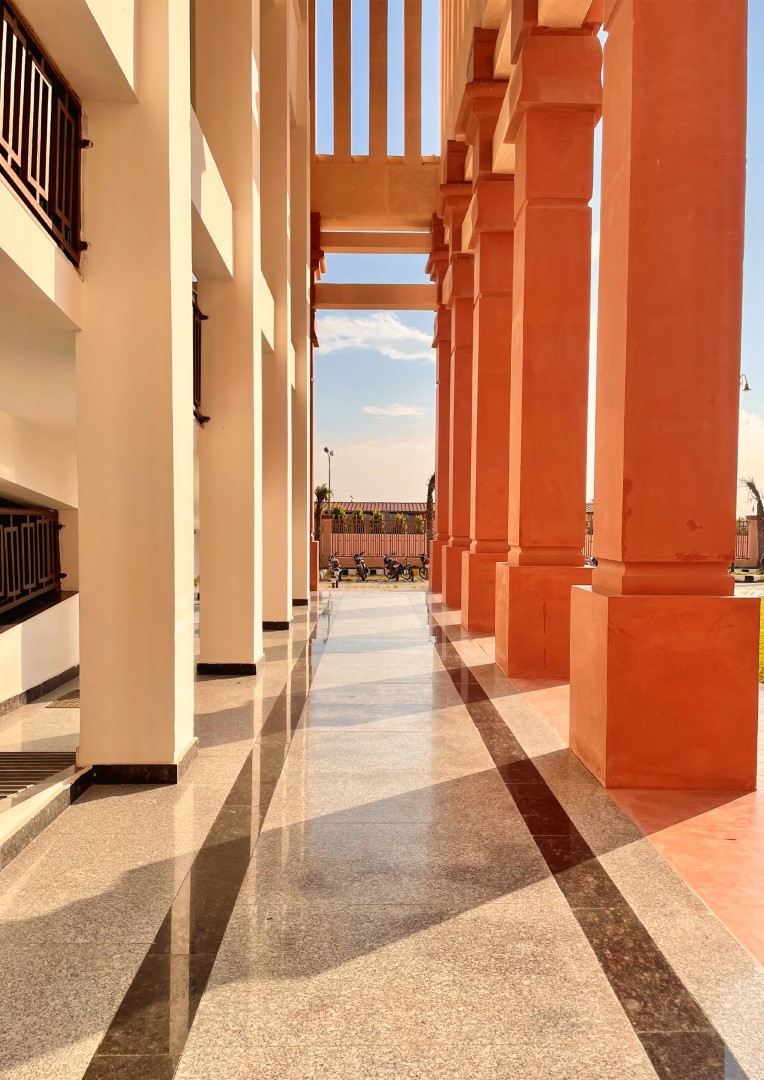
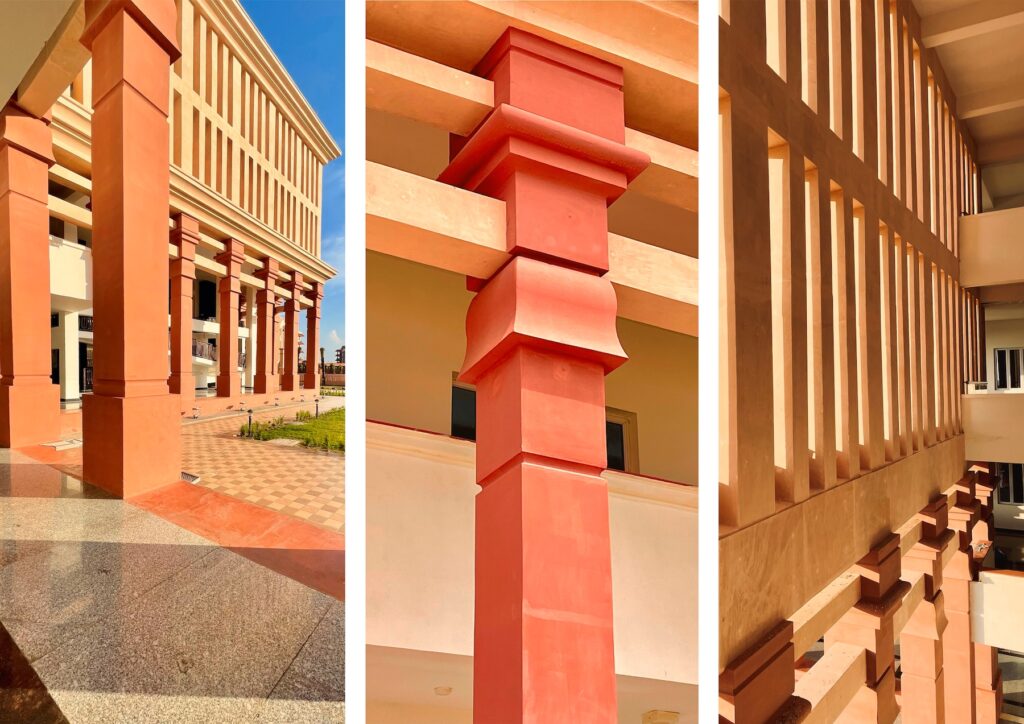
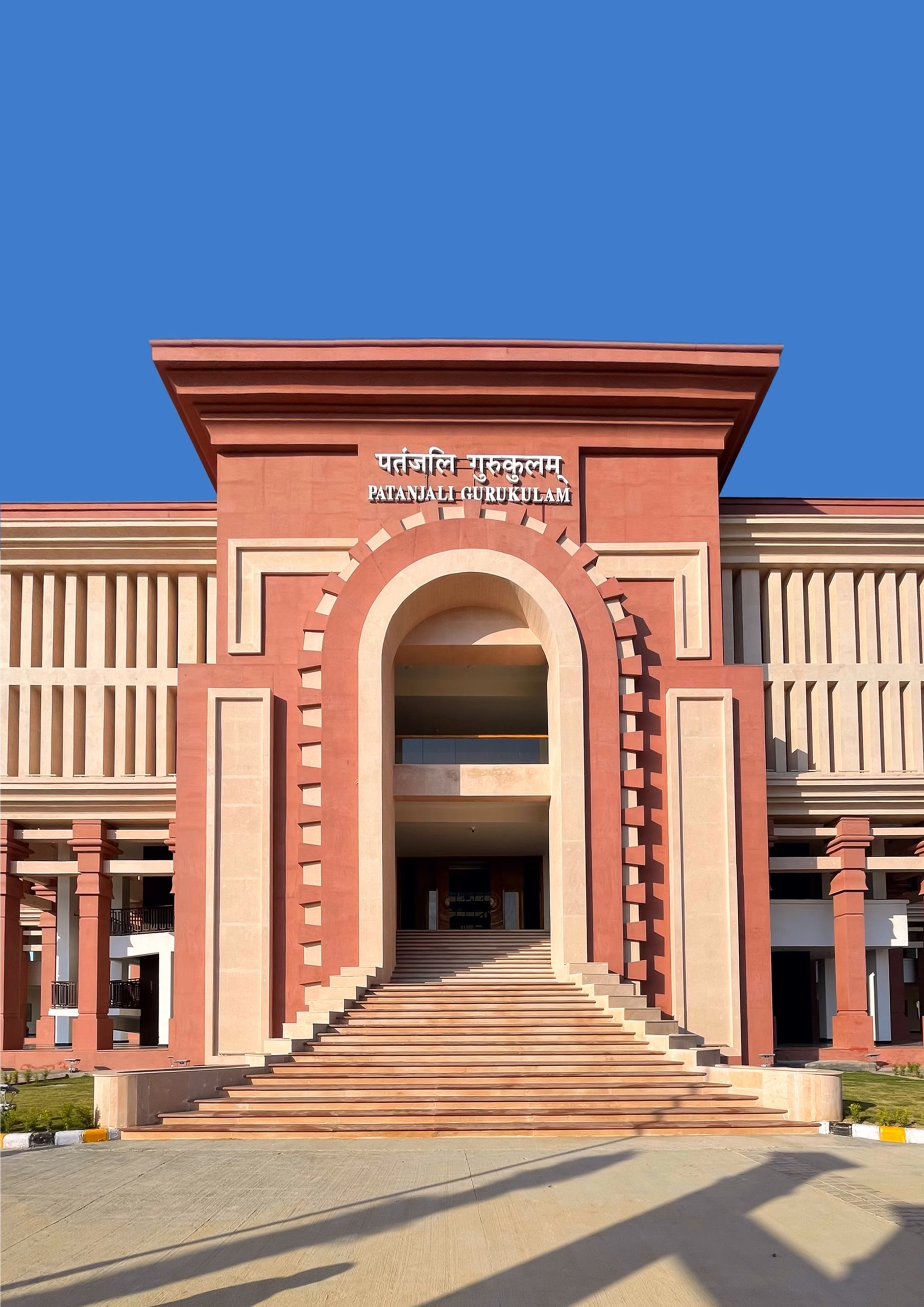
The design concept for “Gurukul, Haridwar” is inspired by the architectural excellence of the Gupta Empire, a celebrated ancient Indian civilization renowned for its art and architecture during the 4th to 6th centuries. The campus is designed with temple-like structures featuring intricate details and ornate pillars, embodying the rich characteristics of Gupta architecture. Key elements such as large courtyards, decorated archways, domes, and open verandas are integrated not only to authentically reflect the architectural style of the Gupta period but also serve as strategic components for climate-responsive design. These features enhance natural ventilation, provide shade, and promote thermal comfort, ensuring the structure is well-suited to its environment.
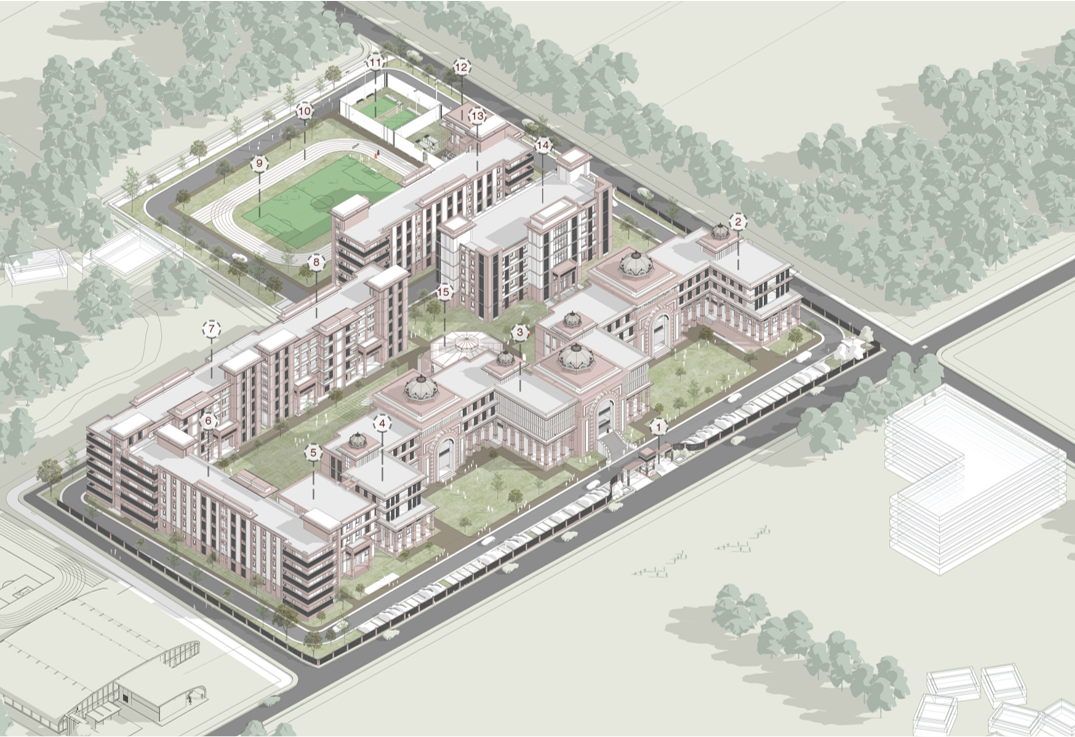
Site Isometric
Focal Features
Main Entrance
Admin Block
Sr. Academic Block
Jr. Academic Block
Sr. Hostel Block
Jr Hostel Block
Football Court
Racing Track
Electrical Sub-Station
Mess & Yoga Block
Yagyashala
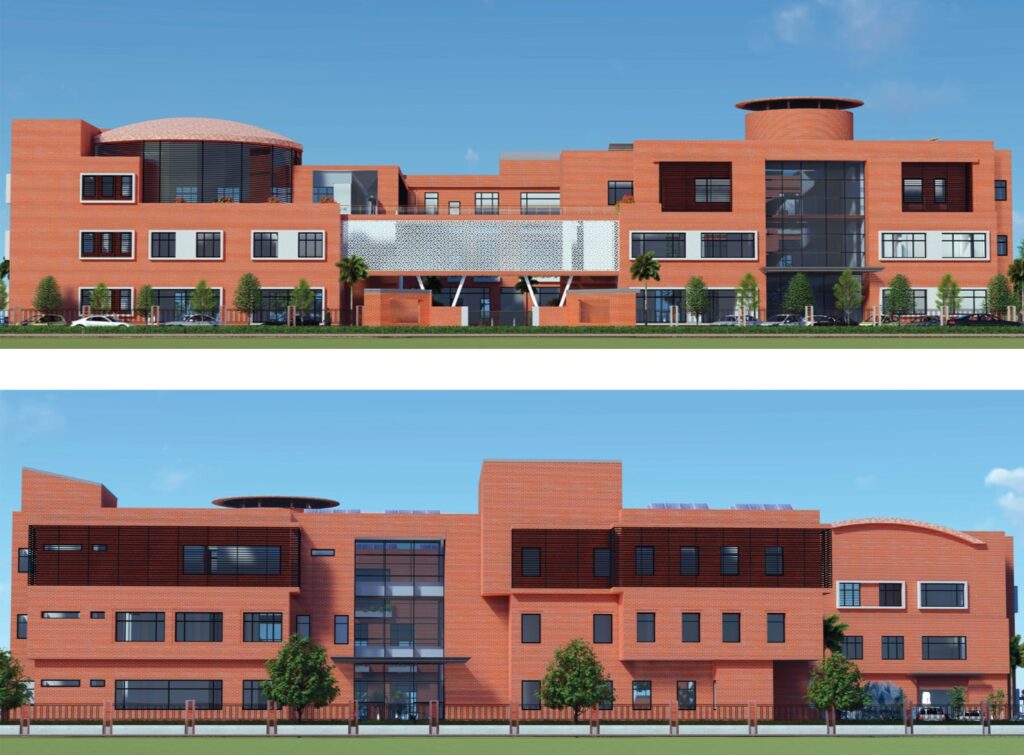
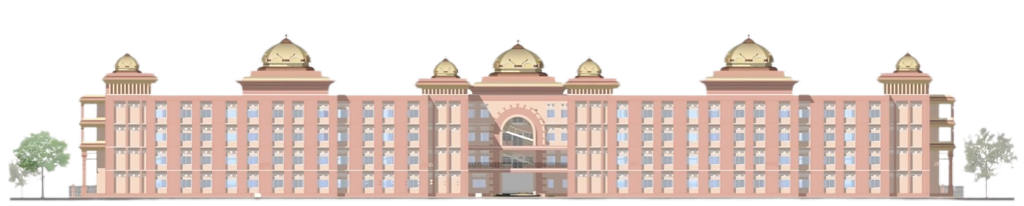
Elevation

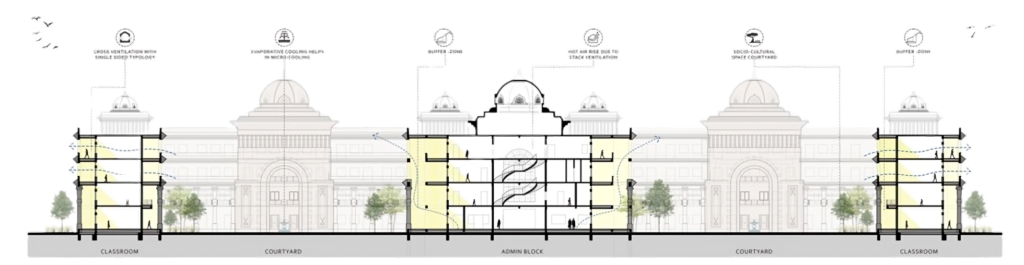
Sections
Design Process
The design process of the project integrates historical authenticity with sustainability, drawing from the architectural legacy of the Gupta Empire. It begins with an in-depth exploration of traditional architecture, focusing on principles of harmony with nature and spatial organization to ensure that cultural heritage is respected throughout the design.
A key aspect of the project is sustainability, achieved through comprehensive site analysis. This includes assessing topography, climate, and natural resources to optimize natural light, passive cooling, and ventilation. These strategies not only reduce energy consumption but also create a nurturing and harmonious environment for students and staff.
Concept development integrates sustainable and cultural principles, with designs reflecting the architectural features of the Gupta period. The campus includes verandas to promote social interaction and provide sun protection, lush vegetation and water bodies for evaporative cooling, and architectural elements such as cavity walls for thermal insulation. Long eaves and shading devices further enhance climate responsiveness.
Environmental Studies
The campus layout features interconnected learning and living spaces, with distinct zones for classrooms, libraries, and residential quarters. Administrative and academic buildings are prominently placed at the entrance, creating a grand gateway with Gupta architectural motifs. Accommodation planning emphasizes functional proximity, with communal spaces reflecting the Gurukul tradition of integrated, multifunctional environments. The centrally located mess block serves multiple roles, supporting yoga, meditation, and other cultural and spiritual activities.This approach ensures that the project aligns with the Gurukul’s cultural, educational, and environmental values while minimizing its ecological footprint.
Project Gallery